
Wednesday, December 16, 2015

Vonnegut Made Me Believe that Reading was Cool, Still Does.

Add caption

One of my favorite authors is Kurt Vonnegut. The first book of his I read was Mother Night when I was 16 years of age. It is a spy novel set in Nazi Germany. It has a very introspective twist when the main character becomes a spy for the Allies, but becomes so entrenched in his role as a Nazi radio propagandist that he forgets which side he is on. I remember so badly anticipating what was going to happen next that I would turn the page before I was done reading it and I would have to turn back to the previous page.
The novel that really made me love his work was the classic Slaughterhouse-five. This book said things to me that I was feeling and had no idea could be articulated. It was also set during WWII, for the most part. There was time travel, aliens, and war, Oh My!
His novels are known for having some "far out" concepts, but the meat of his writing is very personal. He lived through the bombing of Dresden and experienced battle as a soldier in WWII. He has seen some devastating events caused by humans, and he brings those experiences to life in his writing. He also relates to his audience through his expression of some of the most common and mundane experiences. His style is varied and eclectic. However, it is also very straight forward, even with all the satire and irony. If you are ever in the mood for something a little strange or different, but you also want to be shocked and awed, in good and bad ways, Vonnegut can deliver. It is his ability to keep his stories fresh while expressing the most common feelings that people share that keeps me reading more of his work.

Here are some links to samples of his books you can read online. Some pages are omitted, but there is enough to find out if his writing is your cup of tea.
Slaughterhouse-five by Kurt Vonnegut
Mother Night by Kurt Vonnegut
Hocus Pocus by Kurt Vonnegut
The Sirens of Titan by Kurt Vonnegut
Breakfast of Champions by Kurt Vonnegut
Slapstick by Kurt Vonnegut

Tuesday, December 15, 2015

The Blues

I love blues music. I grew up around it, I have always played it, at times I've even lived it. Blues music is universal, yet personal to the individual. We've all had hard times, but the blues came from a people that were uniquely hardened by the circumstances of their time. Slaver, oppression, racism, poverty, and the resilience of a people has created a beautiful art form. I thought about this post from reading Langston Hughes. He injects the blues into his poetry, and if it hasn't been done already, one could create a blues song from some of them. Being a long time fan of the blues I want to share some of Hughes' poetry along with some lyrics from traditional blues music. Both of these are chilling examples of creative expression.

Song for a Dark Girl

Way down south in Dixie
—(Break the heart of me)
They hung my dark young lover
—To a cross roads tree.

Way Down South in Dixie
—(Bruised body high in air)
I asked the white Lord Jesus
—What was the use of prayer.

Way Down South in Dixie
—(Break the heart of me)
Love is a naked shadow
—On a gnarled and naked tree.

The song "Black Girl" also known as "In the Pines" and "Where Did You Sleep Last Night?" is a traditional folk, or blues, song of which the author is unknown. This is the earliest version of the lyrics known to have been in print. These words have been passed on from generation to generation.
"Black girl, black girl, don't lie to me
Where did you stay last night?
I stayed in the pines where the sun never shines
And shivered when the cold wind blows"
Here is Leadbelly's, one of my favorite performers, version of the traditional song. The blues often sounds rough and imperfect. This embodies the sentiment of the blues. It is the moment of expression and inspiration that is the focus of the blues. A great blues musician of the Indianapolis area, "Screamin' Jimmy," once told me that I had to "feel the blues to play the blues." When it is there you can here it, and it doesn't sound like anything else.


Here are some additional links to blues songs. Feel free to post suggestions or links in the comments of some blues music, or any music that you feel uses literary expression, that you enjoy.

Monday, December 14, 2015

Women in Literature During Slavery: A Bridge Between the Privileged and the Oppressed


There a couple of stories written about slavery by white women, namely Louisa May Alcott and Harriet Beecher Stowe. I think both of these writers did a tremendous job to bring various perspectives on slavery to their audience. It was a very important task to do what they had done, and the world was better for having their literature exposed to the masses.


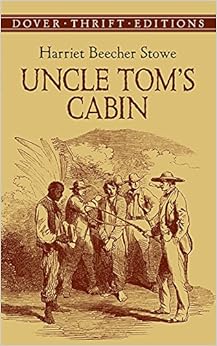
Harriet Beecher Stowe wrote the novel Uncle Tom's Cabin. It was a massive success around the world, and it featured characters from various walks of life. She spotlighted the point of view of slaves, slave owners, women men, and children. Some of them were politicians, husbands and wives, mothers and fathers, fugitives, and so on. Stowe showed what it may have been like to be a slave, to be a slave owner, to be a Northerner with seemingly no stake in the matter, and so on. She provided all sorts of ways to look at slavery, but she sent the message that slavery was not acceptable. She made her point in a very persuasive and open minded way. I think this is why her book was so popular.


Louisa May Alcott was, I think, more combative and controversial on her take of slavery. Her short story "My Contraband" was written during the Civil War, and the story is as dreary and torn as one might imagine the Civil War to be. Alcott creates a love story between a biracial, or black as some would consider anyone of color, man and a white woman. This story is heated and tense with a thick and bloody history between characters. Alcott takes a stronger stance on race relations in general. Not only does she express detest for slavery, but she dares the reader to define love beyond the concept of race. It is a powerful story that is uncomfortable for some even today, let alone during the Civil War. I can only imagine how brave she must have been to write such an idea into a story, or the reaction of her readers.

Both  of these women did not know what it was like to be a slave, but women of that time did know something about oppression, and these two women used that to the best of their unique abilities to make a great contribution to society.

Sunday, December 13, 2015

Edgar Allen Poe: Love and Death


Edgar Allen Poe is known for his mysteriously dark writing. Every element of his writing, tone, plot, imagery, etc., was very dark and brooding. 

His poem titled "Annabel Lee" is no exception. However, love is the focus of the poem. Poe stuck to the darkness he was known for, but used only to express deeply felt love. I enjoy this poem because it shows a different side of Poe. There is still the hint of menace, but love demands attention in this poem, just as the narrator expresses.

Annabel Lee

BY EDGAR ALLAN POE
It was many and many a year ago,
   In a kingdom by the sea,
That a maiden there lived whom you may know
   By the name of Annabel Lee;
And this maiden she lived with no other thought
   Than to love and be loved by me.

I was a child and she was a child,
   In this kingdom by the sea,
But we loved with a love that was more than love—
   I and my Annabel Lee—
With a love that the wingèd seraphs of Heaven
   Coveted her and me.

And this was the reason that, long ago,
   In this kingdom by the sea,
A wind blew out of a cloud, chilling
   My beautiful Annabel Lee;
So that her highborn kinsmen came
   And bore her away from me,
To shut her up in a sepulchre
   In this kingdom by the sea.

The angels, not half so happy in Heaven,
   Went envying her and me—
Yes!—that was the reason (as all men know,
   In this kingdom by the sea)
That the wind came out of the cloud by night,
   Chilling and killing my Annabel Lee.

But our love it was stronger by far than the love
   Of those who were older than we—
   Of many far wiser than we—
And neither the angels in Heaven above
   Nor the demons down under the sea
Can ever dissever my soul from the soul
   Of the beautiful Annabel Lee;

For the moon never beams, without bringing me dreams
   Of the beautiful Annabel Lee;
And the stars never rise, but I feel the bright eyes
   Of the beautiful Annabel Lee;
And so, all the night-tide, I lie down by the side
   Of my darling—my darling—my life and my bride,
   In her sepulchre there by the sea—
   In her tomb by the sounding sea.